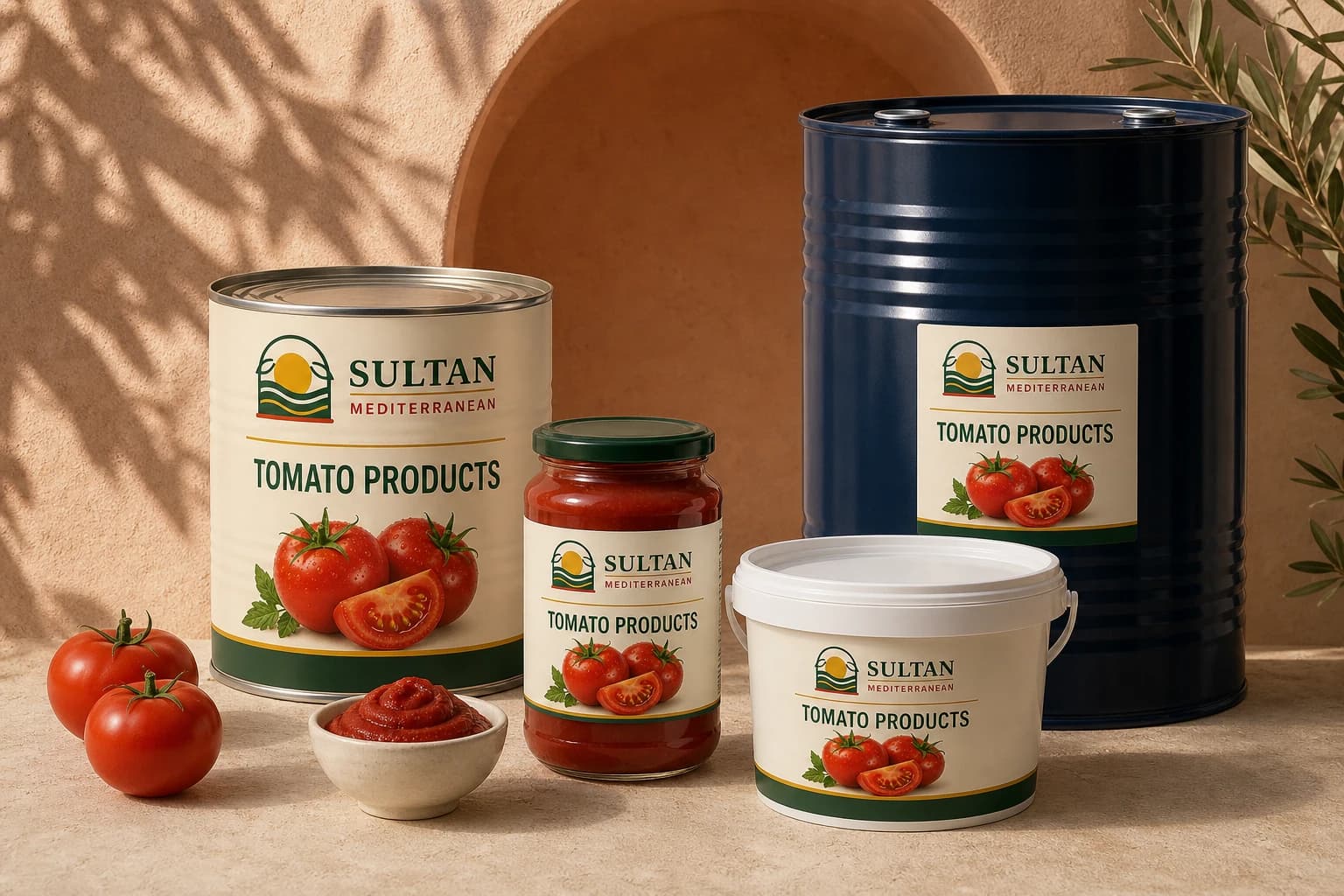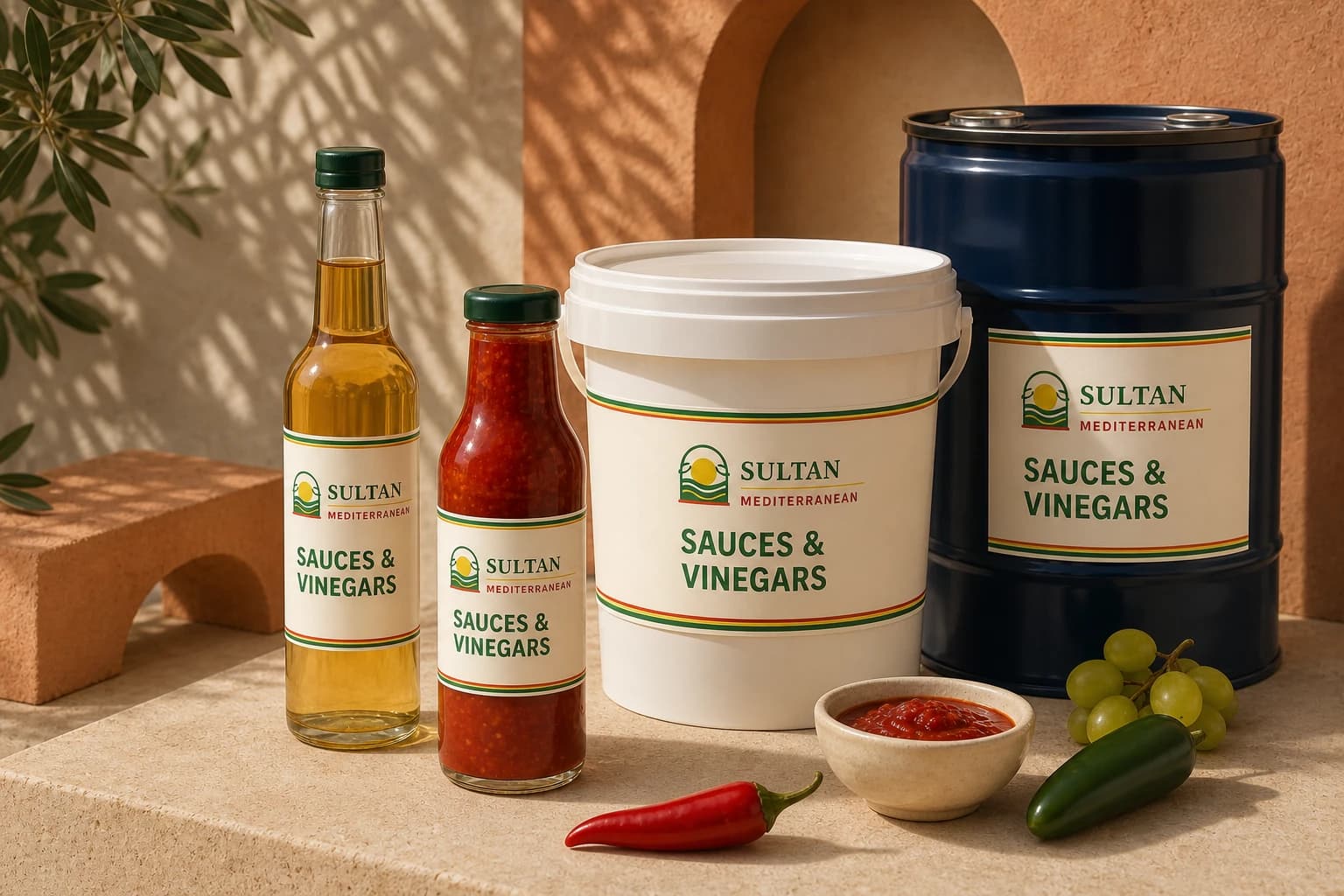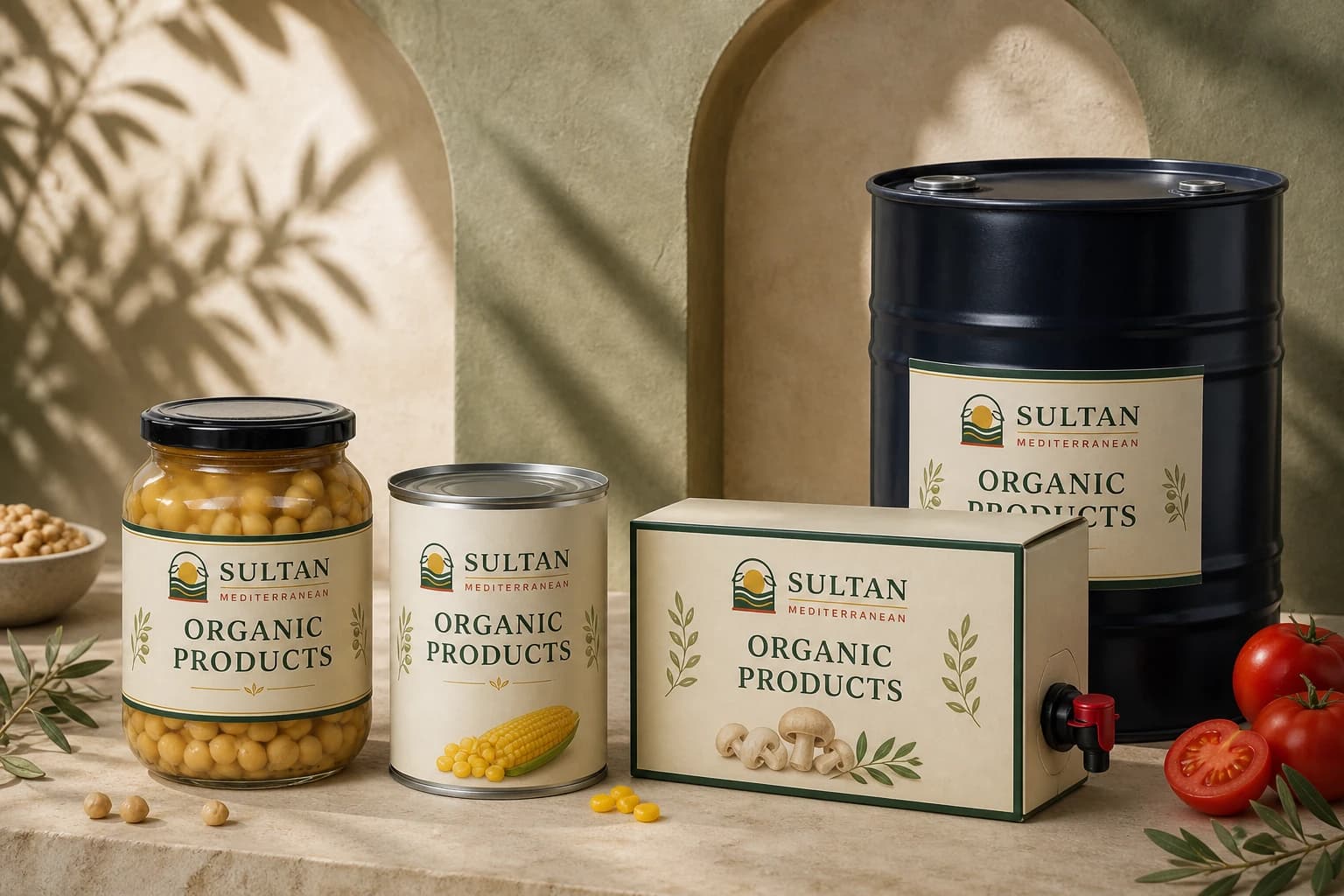
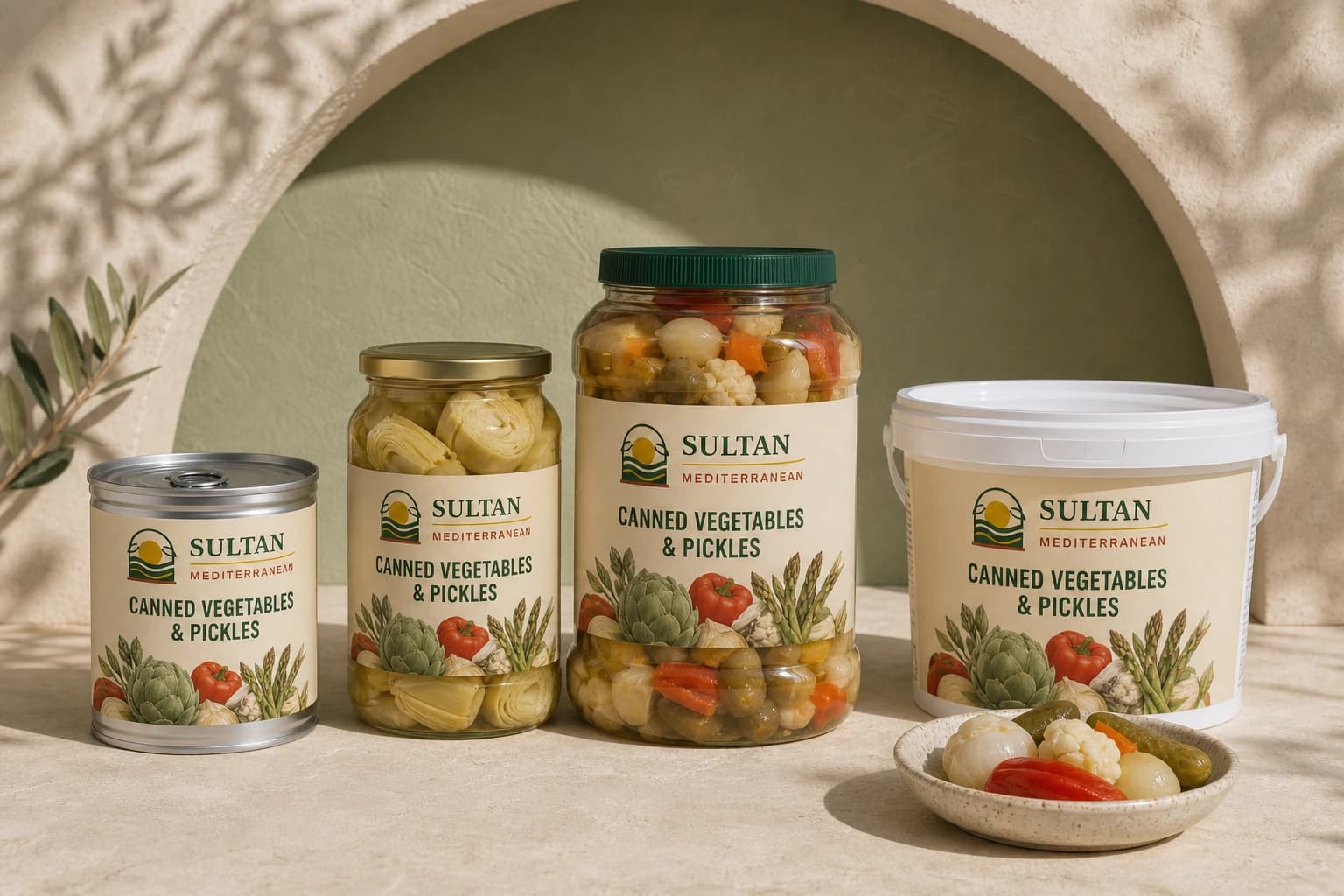
A successful private-label food project starts with a written product brief, target market rules, realistic order volume and an approval calendar. Buyers should align recipe, pack size, label responsibility, certifications, testing, logistics and Incoterms before production—not after artwork is finished.
Türkiye offers a broad base of Mediterranean agricultural and processed food products. Turning that supply into a reliable own-brand program requires coordination between commercial, technical, packaging and logistics teams. The following process helps importers, distributors and retail buyers reduce revisions and reach a comparable quotation faster.
1. Define the product and target channel
Begin with the exact product family, recipe expectations, net weight and channel. A retail jar, a food-service bucket and an industrial drum solve different problems and may come from different production lines.
Share benchmark products where possible, but describe measurable requirements rather than relying only on a sample.
- Product and recipe or grade
- Target net weight and packaging
- Expected annual volume and first order
- Destination country and sales channel
- Target launch window
2. Confirm label and compliance responsibilities
The buyer and supplier should agree who prepares, translates and legally reviews the label. Market requirements can affect product naming, ingredient order, nutrition, allergens, origin claims and recycling statements.
Certification logos must only be used when the product, facility and supply scope support them. Ask for applicable documentation for the proposed item rather than assuming every logo covers every product.
3. Approve samples, specifications and artwork
Use a documented approval path: commercial sample, technical specification, packaging sample, artwork proof and final pre-production confirmation. Record changes and identify which version is binding.
Color on screen is not a substitute for print proof. Barcodes, date-code areas, carton marks and pallet labels also need approval.
- Technical data sheet and ingredient declaration
- Sample evaluation criteria
- Artwork dimensions and print proof
- Primary and secondary packaging
- Case count and pallet configuration
4. Plan production and delivery backwards
Set the requested arrival date, then work backwards through customs, transit, loading, production, packaging procurement and artwork approval. Custom printed materials may determine the critical path.
A DDP, DAP, CIF, FOB or EXW request should state the named place or port. The commercial offer should clearly define what is and is not included.