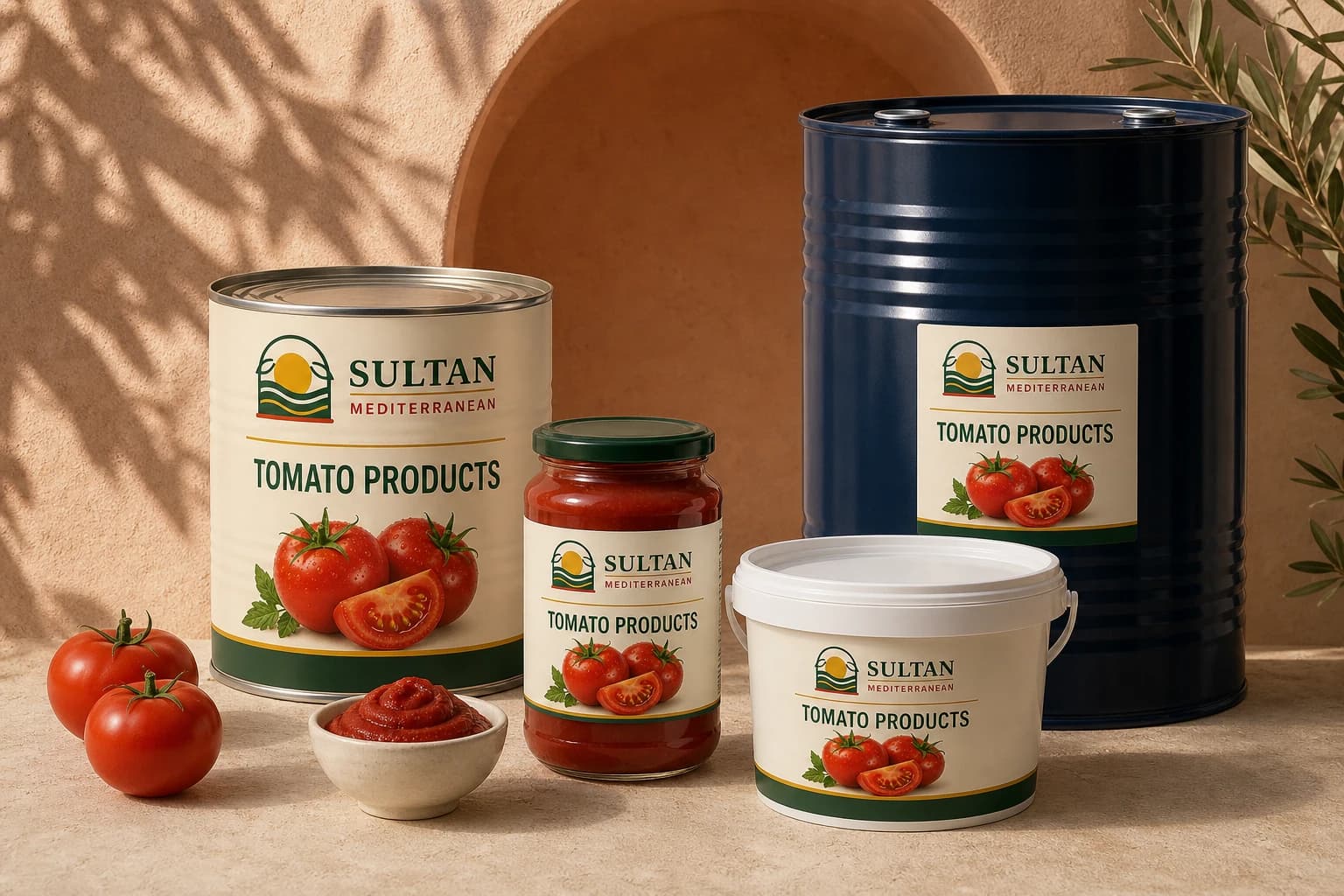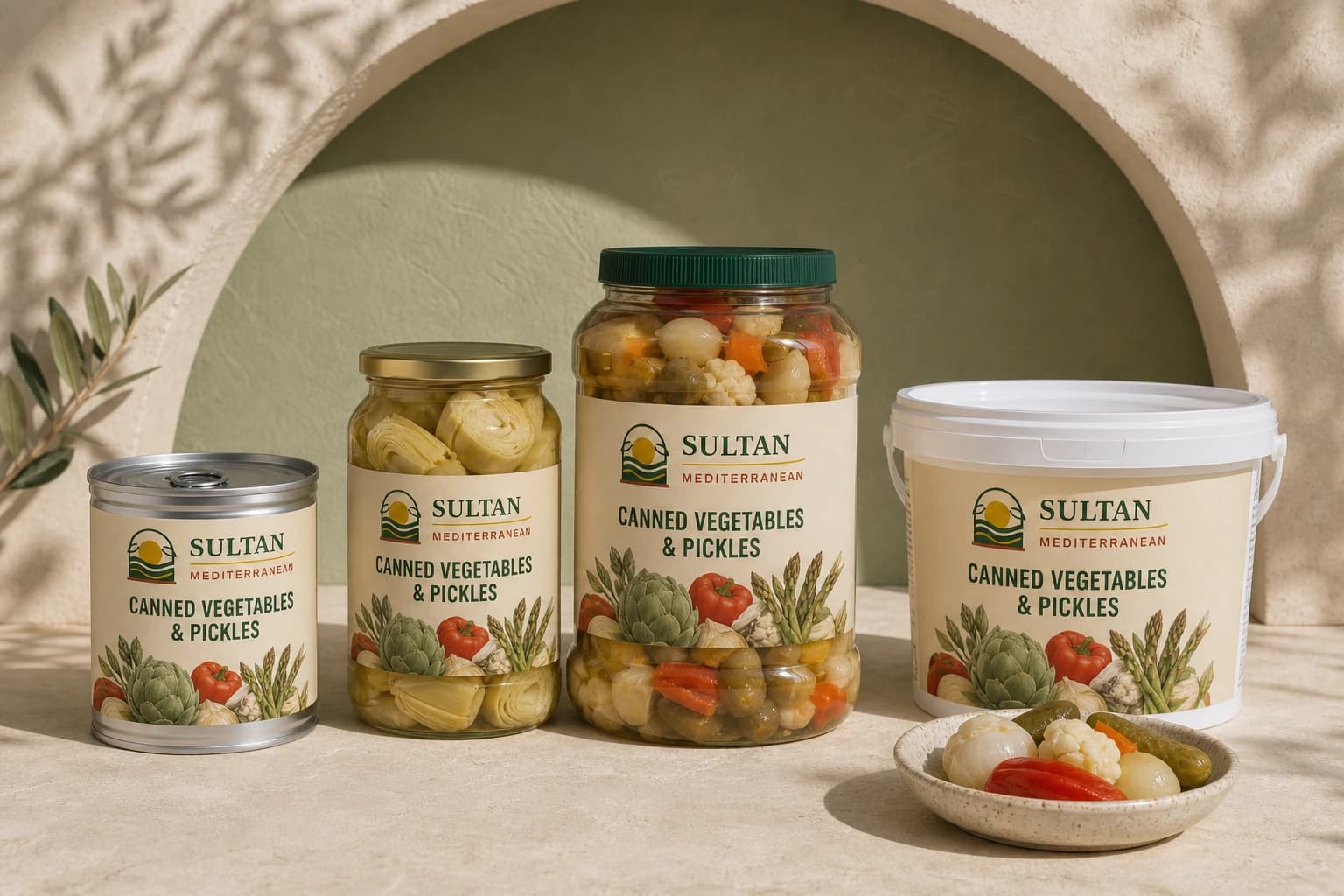
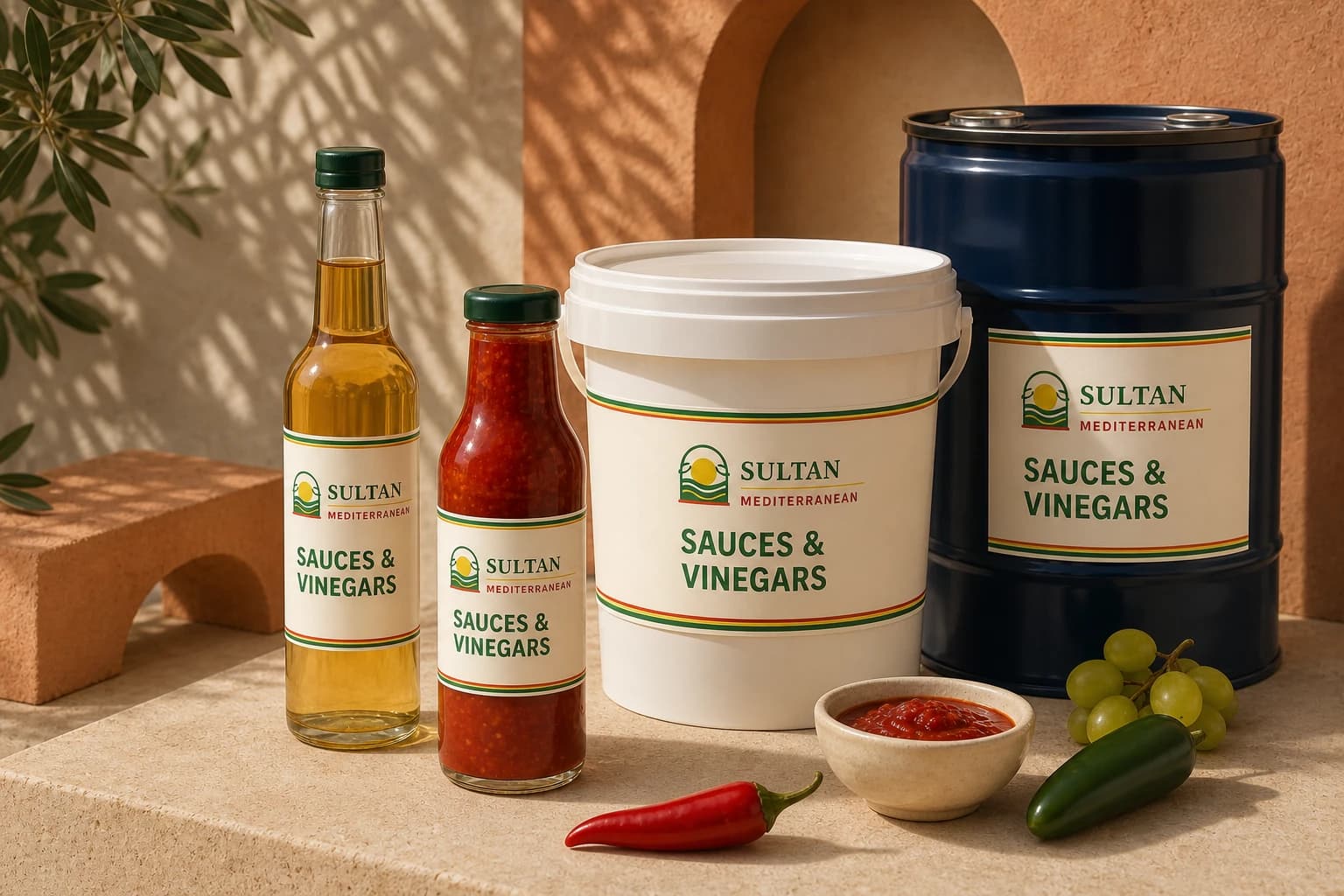
Retail packs prioritize shelf impact, convenience and label compliance; HoReCa packs prioritize portion cost and handling; industrial packs prioritize product protection, line compatibility and cost per kilogram. The best format is the one that fits the product, channel, consumption rate and destination rules together.
Packaging affects much more than appearance. It changes freight utilization, storage, opening procedures, product waste, label space and the buyer’s total landed cost. Mediterranean food products can be supplied in formats ranging from small sachets to aseptic steel drums, so channel requirements should be defined before artwork or pricing is finalized.
Retail packaging: visibility and convenience
Tin cans, glass jars, PET containers, bottles and pouches are common retail choices. Glass supports a premium presentation and product visibility; cans provide strong protection and efficient stacking; PET can reduce weight; pouches offer a modern format with efficient material use.
The destination market determines mandatory label elements. Confirm language, nutritional format, allergen statements, importer details, recycling marks and date coding before print approval.
- Glass jar: premium appearance and visibility
- Tin can: robust protection and stacking
- PET: lower weight and handling convenience
- Pouch: compact storage and flexible portions
HoReCa packaging: speed and portion economics
Professional kitchens need packaging that matches daily consumption. Buckets, large cans, PET jars and bag-in-box formats can reduce unit cost, but an oversized pack may increase waste after opening.
Evaluate opening, resealing, refrigeration space, dispensing and staff safety. A practical pack often creates more value than the lowest price per kilogram.
Industrial packaging: specification and line compatibility
Aseptic bags, bag-in-box and steel drums are designed for high-volume processing. Buyers should confirm net weight, liner or bag specification, pallet pattern, discharge method and compatibility with production equipment.
Shelf life and storage conditions depend on the product and process. Technical documents and loading plans should be approved before shipment.
- Confirm pallet dimensions and container loading plan
- Specify opening and discharge equipment
- Review storage temperature and warehouse conditions
- Agree batch coding and traceability documents
A packaging brief that suppliers can quote
Include product name, target net weight, annual volume, order quantity, destination, sales channel, label language and preferred material. If you are open to alternatives, state the performance requirement rather than only one pack type.
For private label, add artwork dimensions, barcode ownership, carton print, case count and approval deadlines. This prevents late redesigns and makes quotations comparable.